Questions from the Community
Project Patriot is a next-generation digital infrastructure campus planned for Granbury, Texas. Developed by Bilateral Energy and partners, the project is designed to support the growing demand for artificial intelligence (AI), cloud computing, and other digital technologies while prioritizing responsible development and long-term community partnership.
The proposed campus is a self-sufficient development with on-site power generation, privately funded infrastructure, and advanced environmental controls to minimize impacts on local utilities and public resources. Throughout planning and development, Bilateral Energy recognizes that this project has generated significant community discussion in Granbury and Hood County. The questions below address the concerns residents have raised directly and in plain language. This FAQ document will be updated as the project progresses and new questions arise.
Below are answers to some of the most frequently asked questions about Project Patriot and the development process.
Project Overview
Project Patriot is a next-generation digital infrastructure campus in Granbury, Texas. The campus supports the growing demand for artificial intelligence (AI), cloud computing, and other digital technologies that people and businesses rely on every day.
The project is being developed by Bilateral Energy and its partners with a focus on responsible planning, environmental stewardship, and long-term community partnership. Throughout the development process, the team is committed to providing transparent information, listening to community feedback, and working closely with local stakeholders.
Project Patriot will be built on approximately 2,000 acres at 2801 W US Highway 377, on the former Knox Ranch land. The site has been annexed into the City of Granbury and zoned, and the first TCEQ air permit for the project’s power generation was issued in July 2025. The campus accommodates a phased development plan while incorporating setbacks, greenbelts, landscaping, and other design features intended to minimize visual impacts while integrating with the surrounding area.
Demand for digital infrastructure continues to increase as needs from businesses, governments, schools, healthcare providers, and consumers increasingly rely on cloud computing, AI applications, online services, and secure data processing. As such, secure, domestically located computing capacity has become a matter of national security and economic competitiveness. Project Patriot is intended to help meet that growing demand while demonstrating that digital infrastructure can be developed responsibly through thoughtful planning, environmental stewardship, and ongoing community engagement.
The operator will be announced once agreements are
finalized to provide certainty regarding scope and timing. Bilateral Energy will provide power for
the campus regardless of which operator and hyperscaler is selected.
These commitments are fixed parts of the project: islanded, self-generated power with no draw from the electric grid; privately funded infrastructure; a closed-loop, air-cooled design (similar to a car radiator); compliance with the City of Granbury noise ordinance, Texas and Federal regulations, operation under TCEQ permits; and berms and screening between the campus and its neighbors. This ensures the campus is operating under the proper authorities who monitor and enforce water, air, and noise regulations and compliance. Enforcement takes place through the construction and operational life of the project.
A lot of the frustration right now is aimed at the City of Granbury, so it may be helpful to clarify the City’s role. The City of Granbury did not initiate Project Patriot and does not directly manage the development.
Its role is limited by Texas law to standard land-use and permitting processes that apply to any development within its boundaries. This is a private project on private land, and the decisions about it, along with the responsibility for them, rest with Bilateral Energy and the data center developer, not with the City or its staff.
Originally, the Project Patriot property was proposed to be developed in Hood County, under county rather than city authority. Bilateral Energy chose to annex into the City of Granbury so the project would be built under the City’s standards and in coordination with the community. That was a deliberate choice to be more accountable to Granbury.
This property was previously planned for residential development, on the order of 4,000 homes. A subdivision that size would place large, permanent demand on Granbury’s public services: thousands of additional daily car trips on local roads, hundreds of additional students requiring new school capacity, and expanded police, fire, EMS, water, and wastewater service. This would likely require the City of Granbury to increase taxes, or incur debt, to fund and build support infrastructure.
By contrast, Project Patriot generates significant tax revenue while expected to require fewer municipal services than a large housing development, subject to completed water and infrastructure assessments. It supports a modest permanent workforce, generates its own power rather than drawing on public infrastructure, and adds far fewer households, students, and daily car trips. A data center of this kind places far less burden on the community’s services than a housing development of the same size.
In 2025, the City of Granbury and Hood County each issued letters expressing early support for exploring the project. These were part of the normal first step in how large projects begin — an initial signal of willingness to work together, based on Bilateral Energy’s early representations, not an approval of a final, designed project.
At that stage, the detailed design did not yet exist. As the project has advanced, the details have continued to develop, as they do on any project of this scale and duration. That is a normal part of how large infrastructure gets built. It is not a failure by local officials, and it is not something the City Council or the County should be blamed for. The responsibility for this project, and for keeping the community informed as it progresses, rests with Bilateral Energy.
Community Benefits & Partnership
Project Patriot is a long-term community partnership. Its primary contributions to Granbury come through a growing local tax base, work for local businesses, economic growth through high-quality jobs, and privately funded infrastructure that does not burden residents. Project Patriot is expected to contribute to the local tax base over the long term. This revenue means that significant community improvements can be planned and accelerated without requiring the burden to fall solely on residents. Our employees and contractors, who are engineers, electricians, welders, HVAC experts, data center operators, and managers, will be part of the Granbury community. Their families will not only contribute to the community with their taxes, but will also make Granbury their home. Much like the railroads and oil businesses in our history, data centers and the people who work there will be valuable contributors to the community.
Bilateral Energy privately funds the power infrastructure, including building and operating it. That means the project pays its own way and supports responsible long-term growth while keeping its costs from burdening public infrastructure and local taxpayers. Project Patriot expands the tax base well beyond the city limits. It does this without seeking special tax incentives.
Construction is expected to last 4 to 6 years, with 4,000 to 5,000 workers on site at peak. Once the campus is operating, Project Patriot expects at least 60 permanent jobs per phase across the power facility and data center, and we expect the actual number to be higher as the campus is built out. There are two planned phases, with potential to scale up to four phases total.
Yes. Qualified workers who live within 50 miles of Granbury will receive hiring preference when available, subject to applicable hiring requirements.Once hired, employees will receive specialized training to build the technical skills these jobs require.
By choosing to annex into the City of Granbury, Bilateral Energy pays full city property taxes that the project would not have owed if it had remained in the county. Incentives, including a possible tax abatement, were discussed in good faith with the City. Bilateral Energy has chosen to move the project forward without those incentives, paying its full share, as part of being a long-term partner to Granbury and Hood County.
By choosing to annex into the City, the project is subject to city property taxes it would not have owed had it remained in the county. It will pay its full property taxes, including school taxes, under the same rules that apply to any business in Texas, and it privately funds its own infrastructure and generates its own power, so it pays its own way rather than shifting costs onto residents.
In addition to the full property taxes it will pay, Bilateral Energy intends to establish a Community Benefit Fund to direct a portion of the project's revenues toward Granbury and Hood County priorities. This fund is a separate contribution to local priorities and is not tied to any incentive. The structure and funding levels of the Community Benefit Fund are currently being finalized in coordination with local leaders. Bilateral Energy commits to making the terms of the Community Benefit Fund publicly available once finalized. Residents and community organizations are encouraged to share their priorities through the project's contact form.
Being a good neighbor means designing and operating the project in a way that respects the surrounding community.
For Project Patriot, that means designing the campus to generate its own power, building in noise and visual mitigation, communicating openly with residents, and providing project updates as development progresses. The project team listens to community feedback and works collaboratively with local stakeholders throughout development. It also means paying its own way without seeking special tax incentives, and generating its own power rather than drawing on the community’s.
Yes. Bilateral Energy is committed to participating in the Community Benefit Fund and to supporting local schools, STEM education, workforce development, and programs that introduce students to careers in the trades, digital infrastructure, and related technical fields. A growing local tax base also helps support the schools and services the community relies on.
Beyond schools, a significant portion of the project's construction budget will go to local businesses — real dollars into the pockets of local companies and the families they support. Electricians, welders, HVAC technicians, dirt work and excavation crews, cleaning services, landscapers, restaurants, and engineering firms all stand to benefit.
Crypto mining and data center operations of the past have relied on utilities (electricity, etc.) that were also used by the community. This has had a negative impact on rates and availability. By generating its own power, privately funding the infrastructure the campus needs, and carefully planning its environmental systems, Project Patriot can support future digital infrastructure needs while keeping demands on local public resources low.
Appearance & Site Design
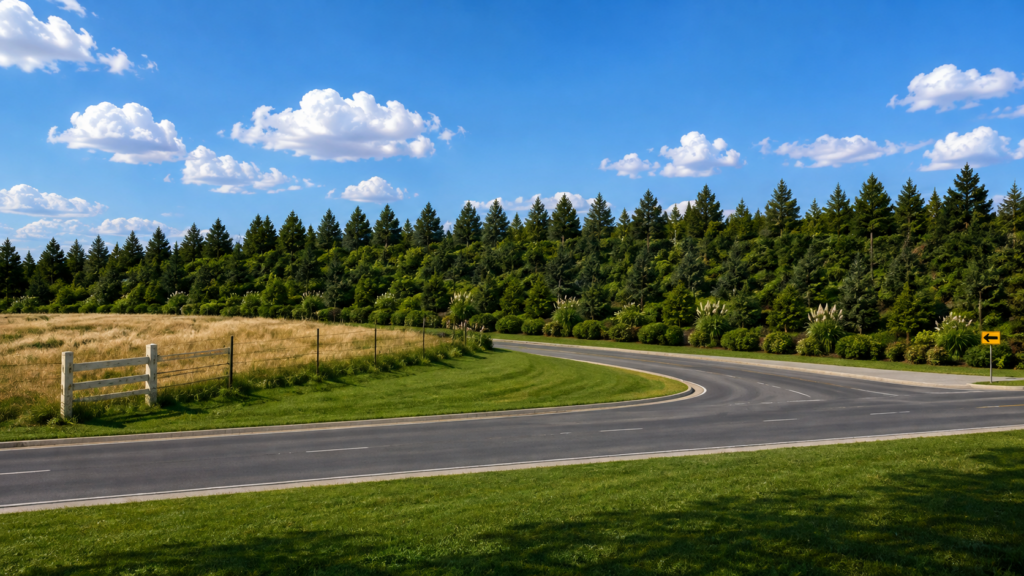
Project Patriot has been designed with careful consideration for how it will appear within the surrounding community. The campus will incorporate landscaped buffers, berms (earth mounding), setbacks, and architectural screening intended to reduce visual impacts from nearby roads and neighboring properties. The campus will be housed within enclosed, clean, office-style buildings rather than open industrial facilities. While the campus is designed to be visually appealing, it is also designed to be discreet and buffered by vegetation and landscaping. Bilateral Energy and its partners will continue sharing renderings and visual materials to help residents better understand the appearance of the campus.
Visual from Rickabaugh Road:
Visual from Knox Road:
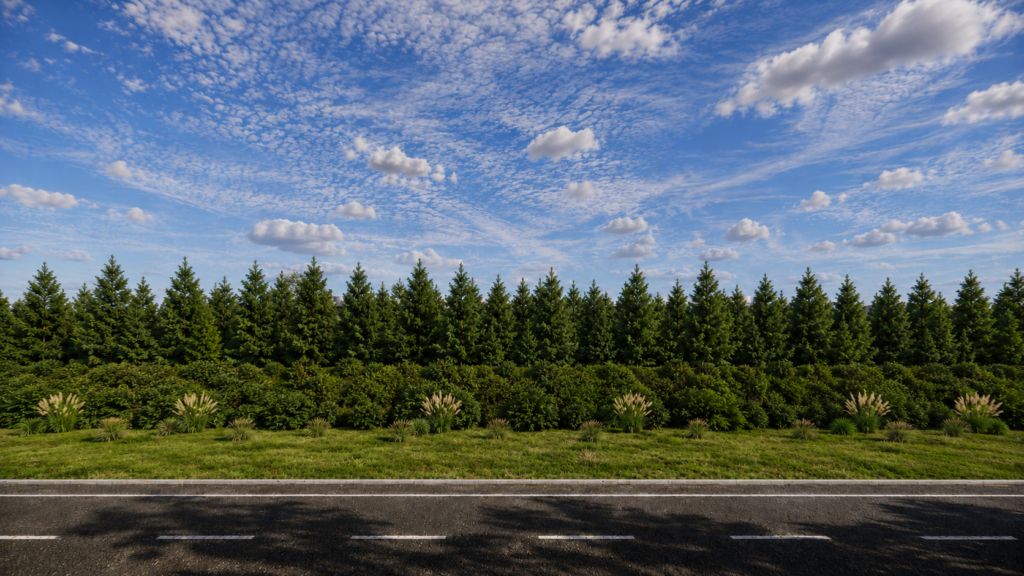
The project team has designed the campus to separate itself from the surrounding area using a natural green belt including a combination of landscaping, berms, setbacks, and site planning measures intended to minimize visibility from surrounding roadways and neighboring properties. This not only makes the campus discreet, but also minimizes light and noise.
Additional street-view renderings are currently being developed to provide residents with a better understanding of how the campus is expected to appear from key viewpoints around the site.
The exhaust stacks are permitted at up to 90 feet. The data center buildings will be lower than the power plant and must meet the City’s height standards. The campus is being designed to resemble an office park rather than a traditional industrial facility, with the goal of incorporating the stacks into the building design rather than leaving them fully exposed, and with berms and vegetation providing additional screening from surrounding roads and properties. It is conceptual and may change as design advances.
Power & Utility Impact
No. Project Patriot generates 100% of the electricity it needs on site, through a self-contained “islanded” power system. Because the campus produces its own power and operates independently of the regional electric grid, it places no additional demand on local electric infrastructure and has no effect on electricity reliability for residents.
An islanded power system is one that generates and uses its own electricity rather than relying on the public electric grid.
No. Project Patriot has no interconnection request with ERCOT and no plans to connect to the grid. The campus is designed to run entirely on its own on-site power. Any future connection would be considered only if it benefited the state and its residents.
No. Because Project Patriot generates all its own power on site and privately funds its own infrastructure, it operates independently of the utility systems that determine local electric rates.
No. Project Patriot runs entirely on its own on-site generation and serves only itself. During periods of grid stress, including extreme heat or cold, it draws nothing from ERCOT and places no demand on the power Texas homes rely on.
Water, Noise & Environment
Across the first two campuses, the power plant will use up to 35 million gallons of water a year, mostly for evaporative cooling on the hottest days. Staff use and landscaping add a smaller amount, which is being finalized and will be partly offset by
capturing rainwater on site. The power plant’s 35 million gallons is about 4 percent of the water demand that the 2018 engineering study for the earlier Knox Ranch residential plan projected for this land.
The current plan is municipal water from the City of Granbury, with a well as backup. The supply plan is still being finalized with the City and remains subject to permitting. The project's water use is a small fraction of what the residential development previously planned for this land was projected to need, and the site will capture rainwater to offset part of its needs.
The data center buildings are cooled by a closed-loop, air-cooled design, similar to a car radiator. The fluid that carries heat away from the equipment is sealed inside the system and recirculated. The recirculating fluid is not routinely consumed or discharged in the closed loop; supplemental evaporative cooling does consume water. The heat is released to the outside air by fans.
We want to be upfront about one thing. the hottest part of the year, the power plant uses evaporative cooling to maintain its output, and this step does use water. That use is included in the up to 35 million gallons a year for the first two campuses.
Yes. The site is being designed to capture rainwater and use it to help offset some of the project’s water needs.
Project Patriot is designed with multiple layers of noise mitigation. The power generation equipment sits inside enclosed, office-style buildings with built-in sound suppression rather than operating as exposed outdoor equipment, and berms, landscaping, setbacks, and site planning add further separation from neighboring properties. This fully enclosed design is very different from the open Bitcoin and crypto-mining equipment that has caused ongoing noise complaints for residents. The facility is designed to comply with the City of Granbury's applicable noise limits at the property line, and an independent noise modeling is planned during permitting, and Bilateral Energy intends to share the results publicly.
Sound is addressed in layers, starting at the source and working outward. First, the equipment sits inside buildings, not in the open. Second, installation and isolation techniques inside the buildings contain sound at the building. Third, the buildings are set back from the property line and from neighbors. Fourth, earthen berms stand between the buildings and nearby properties. Fifth, planted vegetation adds a further buffer.
Yes. Bilateral Energy intends to publish an independent noise study before construction begins.
Power Generation
The power generation plant design will feature large-frame GE gas turbines, reciprocating engines, fuel cells, and BESS. turbines will use dry low-NOx combustors, which keep water use low, and the turbines and reciprocating engines will use Selective Catalytic Reduction (SCR) to reduce emissions. The power plant will be inside buildings integrated to mimic an office park vs. an industrial park for acoustic and aesthetic reasons.
Project Patriot's on-site power generation uses advanced, best-available emissions-control technology, designed to exceed traditional approaches. This technology includes Selective Catalytic Reduction (SCR) technology, one of the most effective tools available for reducing nitrogen oxide (NOx) emissions from energy generation. Bilateral Energy received approval from the Texas Commission on Environmental Quality (TCEQ) in July 2025 to build the electrical generating facility. The project will meet or exceed all applicable TCEQ and federal air permit standards. Bilateral Energy will make air permit documentation publicly available through this site. Bilateral Energy has also committed to publishing an annual public emissions report.
TECQ issued the first air permit for the project’s power generation in July 2025, and it is being updated as the design advances. The additional power facilities on the campus will each go through their own TCEQ air permit review.
No. The on-site generation facilities planned for Project Patriot are very different from what most people picture as a traditional industrial power plant. The campus is being designed to resemble an office park rather than a traditional power plant, with the goal of incorporating the exhaust stacks into the building design rather than leaving them standing out as the tall, exposed stacks people associate with industrial facilities.
Generation equipment will be housed inside enclosed, office-style buildings designed with integrated noise suppression and architectural screening. The project also incorporates landscaping, berms, and other design elements intended to reduce both visual and operational impacts while integrating with the surrounding area.
Airspace & FAA Notice
Air safety is handled through a defined federal legal process. Because the site is near Granbury Regional Airport, federal law requires Bilateral Energy to file a notice with the Federal Aviation Administration (FAA) before construction. The notice is not a building permit and does not approve or authorize construction. Instead, the notice triggers the FAA to conduct a study called an Obstruction Evaluation/Airport Airspace Analysis. This review evaluates whether the project’s features, including the stacks, could affect the safe use of the surrounding airspace. If the FAA identifies an adverse effect, its process considers whether the proposed structures can be eliminated or mitigated before the FAA issues a final determination, and Bilateral Energy will comply with the FAA’s requirements. In addition, Bilateral Energy is proactively modeling the exhaust plumes for both Granbury Regional and Pecan Plantation airports. The FAA’s filings and determinations are public, and residents can follow the review directly.
There is nothing to look up yet. Once the notice is filed, we will post the FAA study number on this site. You can then track the review at https://oeaaa.faa.gov/oeaaa/oe3a/main/#/search/records, where the FAA posts the filing, any public notice, and its final determination. Federal privacy rules limit the project detail shown there, and records are removed after one year.
The FAA’s airspace review evaluates the project’s structures and determines whether they present a hazard to air navigation. If the FAA identifies an adverse effect, its process considers whether it can be eliminated or mitigated before issuing a final determination. In addition, Bilateral Energy is proactively modeling the exhaust plumes for both Granbury Regional and Pecan Plantation airports, and will adjust the design if the analysis calls for it.
Traffic, Lighting & Public Safety
Bilateral Energy is working directly with the City of Granbury, Hood County, and TxDOT to identify any roadway improvements needed at site access points, including turn lanes and signage. Bilateral Energy and its partners plan to use local railroad systems to minimize traffic impacts. If implemented, rail deliveries could reduce the number of construction-related truck trips.
Construction traffic will be routed to avoid residential streets and school zones, and construction activity will be scheduled within standard daytime hours. Once operational, the campus is expected to generate substantially less daily traffic than during construction, since the facility requires relatively small permanent staff.
The project does. The City City requires a traffic study, which is underway, and Bilateral Energy will pay for the road improvements the study identifies.
Bilateral Energy is planning an offsite parking and shuttle program that moves construction workers to and from the site, with the goal of reducing construction-worker traffic and parking impacts on surrounding roads and neighborhoods. Specific offsite locations are being evaluated, and details will be shared as they are confirmed.
Bilateral Energy recognizes that dark, open night skies are an important part of life in Granbury, and that light pollution is a real concern for a project of this size. Site lighting will comply with all applicable City of Granbury lighting ordinances, and the design will go further where practical: fully shielded, downward-directed fixtures to prevent glare and skyglow, minimal or no uplighting, and lighting levels and controls that scale to what security and safety actually require rather than continuous full-site illumination. Because the majority of equipment will be housed inside enclosed buildings rather than operating in an open outdoor yard, the campus exterior lighting footprint is expected to be smaller than that of a typical industrial facility. Bilateral Energy is committed to protecting the night sky to the greatest extent possible while still meeting safety and security needs.
Bilateral Energy intends to work closely with Hood County and City of Granbury fire, police, and EMS to make sure local responders have the site access, layout information, and coordination they need. In addition, the campus is being designed with its own onsite fire suppression systems and dedicated safety personnel, so that day-to-day operational safety needs are handled primarily by dedicated onsite resources rather than adding demand to local emergency services. Local first responders would remain the primary contact for any offsite emergency, with mutual aid coordination consistent with any large-scale development in the area.
Community Engagement & Transparency
Bilateral Energy is committed to direct, ongoing engagement with Granbury and Hood County residents. That includes maintaining this website with updated project information and responding to inquiries submitted through the contact form.
We recognize that many residents learned about this project in ways that felt indirect or incomplete, and that questions and uncertainty have filled that gap. That's on us to fix. This site will serve as a central source for project updates and responses to community questions — and we'd rather you bring us a question directly than rely on secondhand information, so we can respond openly and on the record.
Yes. Bilateral Energy intends to continue engaging with community members throughout the development process.
Residents can submit questions and feedback through the project website and will be informed of additional engagement opportunities as they are scheduled.
Project Patriot is a multi-year, multi-billion-dollar development. Projects of this scale advance in stages. In broad terms: a site is first evaluated against the technical criteria the project requires. If it fits, the next step is to approach the city and county to see whether they are open to working on the project. The project then goes through the entitlement and zoning process. Once a site is entitled, it is presented to a potential data center operator, who then conducts extensive due diligence of their own. Campus design then follows, and continues to evolve as engineering, permitting, and the operator’s requirements are worked out.
Because the project genuinely changes as it moves through these stages, much of the early information is not final. Bilateral Energy chose not to publish details likely to change, to avoid putting out numbers that would then have to be corrected. We understand that came across as withholding information, which was never the intent. Going forward, we will share where the project stands at a given point in time, with the clear understanding that specifics may change as the project advances.
As with any infrastructure project, certain details may continue to evolve. Bilateral Energy is committed to sharing updated information as it becomes available and providing the community with accurate, transparent information throughout the planning process.
The Project Patriot microsite will serve as the primary source for project information, updates, frequently asked questions, and contact information.
As planning progresses, additional materials—including project renderings, technical information, and community updates—will be added to the website.
Community Engagement & Transparency
Bilateral Energy is committed to direct, ongoing engagement with Granbury and Hood County residents. That includes maintaining this website with updated project information and responding to inquiries submitted through the contact form.
We recognize that many residents learned about this project in ways that felt indirect or incomplete, and that questions and uncertainty have filled that gap. That's on us to fix. This site is where we'll give clear, factual answers — and we'd rather you bring us a question directly than rely on secondhand information, so we can respond openly and on the record.
As with any infrastructure project, certain details may continue to evolve. Bilateral Energy is committed to sharing updated information as it becomes available and providing the community with accurate, transparent information throughout the planning process.
The Project Patriot website will serve as the primary source for project information, updates, frequently asked questions, and contact information.
As planning progresses, additional materials—including project renderings, technical information, and community updates—will be added to the website.
Digital Infrastructure & Industry Questions
A data center is a secure facility that houses computer servers, storage systems, and networking equipment used to process, store, and transmit digital information.
Data centers are the physical backbone of everyday life, the same way power plants and water systems are. Many everyday activities—from online payments and medical records to weather services and emergency communications—depend on data-center infrastructure.
The current wave of growth is driven largely by artificial intelligence, which is why demand is increasing so quickly. Project Patriot is part of that infrastructure, built to modern standards for how it uses power, water, and land. The real question is not whether this kind of infrastructure gets built, but whether it is built responsibly, and that is the standard we are holding ourselves to. Data centers support many of the technologies people rely on every day, including online banking, healthcare systems, streaming services, cloud computing, education, artificial intelligence, business applications, and emergency communications.
Demand for digital services continues to grow rapidly as more organizations adopt cloud computing, AI technologies, and data-intensive applications.
To support this growth, additional digital infrastructure is needed to provide the computing capacity, reliability, and security required by businesses, governments, healthcare providers, educational institutions, and consumers.
As the economy and national security depend more on computing and artificial intelligence, there is growing recognition that this capacity should be built in the United States rather than relying on facilities overseas. Texas has become a center of that effort because of its energy resources and independent grid.
Building this infrastructure here means it is developed under American environmental, safety, and labor standards, by local workers and contractors, and anchored in communities like ours. Project Patriot is part of keeping that capacity, and the investment that comes with it, in Texas and in the United States.